
PRIVATE PARTY VENUE
Eastnor Castle is the ultimate private party venue! A private home which was designed for parties and entertaining, Eastnor Castle is now a luxury venue for birthday parties, wedding anniversaries, family reunions or any type of private parties or celebrations.
EASTNOR CASTLE HISTORY
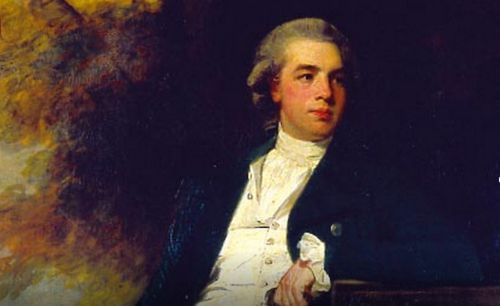
The Cocks family, ancestors of the present owner, moved to Eastnor at the end of the 16th century. They bought the Manor of Castleditch, an engraving of which is in the Great Hall, and over the following 200 years gradually accumulated further land in this area.

The Cocks married into the Worcestershire-based Somers family; the aggregation of their estates with the valuable inheritance passed down by the Lord Chancellor Somers in the early 18th century, the banking wealth of the Cocks Biddulph bank (now incorporated into Barclays), and the sale of his father’s estate at Dumbleton, near Evesham, gave the 1st Earl Somers the means to start building the castle in 1812. The family, distinguished in law, politics and the army, needed a new residence more in keeping with its status.

THE STAIRCASE HALL
The 16th century tapestries were bought and hung here in 1990 to take the place of portraits now in the Dining Room. The largest of these depicts the meeting of Anthony and Cleopatra. The set of three Bruges tapestries show Judith with the head of Holophernes, Solomon and the Queen of Sheba and Susannah and the Elders. The staircase was designed by Smirke with cast iron banisters. The bust of Charles, 3rd Earl Somers, is by Sir Edgar Boehm. The wooden chandelier came from the Palazzo Corsini in Florence, and the hall chairs are Venetian, bearing the arms of a 17th century doge. The dragon benches are of the same period.

THE RED HALL
The shields around the Hall door are 14th century Austrian pavises, used to shelter crossbowmen when re-arming their weapons. The Dutch clock is 18th century; the knight on horseback is Italian with the Visconti crest on his shield.

THE GREAT HALL
The Great Hall is a very versatile room and can hold up to 150 people theatre-style. It is an extremely grand yet inviting room that is made to feel very welcoming by the log fires, opulent furnishings and soft lighting.

THE STATE DINING ROOM
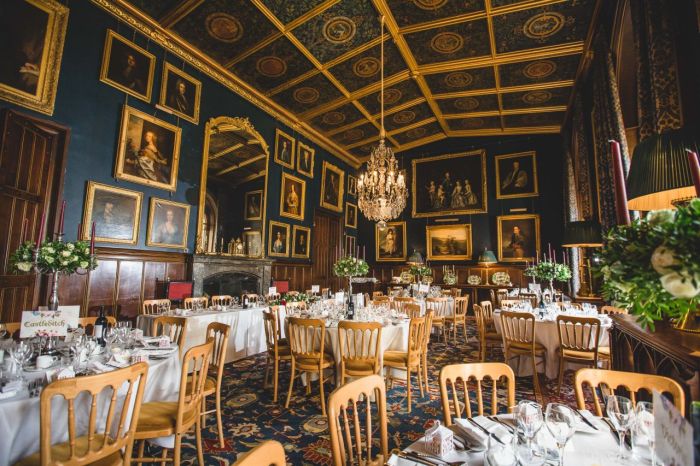
The State Dining Room is used for both corporate and private functions and can seat up to 22 people around the central dining table or up to 80 people on individual round tables.

We serve delicious food, made with the best fresh local produce that is served with excellent wines and Malvern spring water.
THE GOTHIC DRAWING ROOM
This room survives largely unchanged from the time when it was redecorated by the Crace brothers to the designs of A W N Pugin for the 2nd Earl in 1849. The massive chimney-piece by Bernasconi and family tree depicted above it provide the focus, while the chairs, table, desk and bookcase were all designed by Pugin, with the Somers’ ‘S’ and coronet inlaid in the table and bookcase doors.

The chandelier was exhibited at the Great Exhibition in 1851 and made by Hardman of Birmingham from an original in a Nuremberg church. Hardman made the firedogs too, and Minton produced the tiles. Pugin, responsible for much of the original decoration in the Palace of Westminster, designed the new decoration for this room in 1849.

THE LONG LIBRARY
Designed G E Fox to the 3rd Earl’s specification, the shelving and inlaid woodwork were made in Italy and assembled on site by Estate workmen. The 17th century tapestries illustrate scenes from a poem dedicated to Catherine de Medici, which compares her life to the story of Queen Artemisia and her son, Lygdamus, and came from a palazzo in Mantua. The tapestries between the windows depict mythical scenes, and the ceiling is painted with emblems of various qualities representing virtues and their corresponding vices.

THE LITTLE LIBRARY
The walnut shelves were bought in Siena from the assembly hall of the Academy of the Intronati. A sign on display records that they were designed by Josef Posi and date from 1646. The mirror over the chimney-piece is framed by pearwood carvings formerly at the family home in Reigate. The Burroughes and Watts billiard table dates from the early 20th century and is regularly used by guests. This room was redecorated in 1990, using a material of Victorian design from Watts of Westminster, reprinted for the purpose.

THE OCTAGON ROOM
This room is very bright with French windows that lead out onto the terraces overlooking the lake. The Octagon Room makes for a perfect meeting room offering complete privacy with beautiful views. It will accommodate up to 60 people theatre style or makes for an ideal boardroom for smaller meetings.


STATE BEDROOM
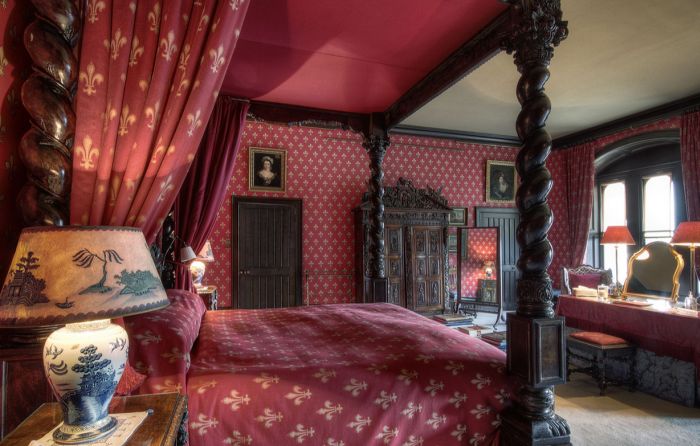
This was the 3rd Earl’s bedroom and is hung with panels from the Royal School of Needlework. The large altarpiece with tabernacle over the wardrobe is partly by Ridolfo di Ghirlandaio. The Last Supper is from the studio of Jacopo Bassano and The Baptism of Christ over the entrance by a follower of Tintoretto. The bed is Italian and belonged to Cardinal (now Saint Robert) Bellarmine (17th century). The wardrobe and chest of drawers are 17th century Genoese. The Latin motto of the Cocks family, “Spes nescia vinci” on the chimney piece means: “Hope knows no defeat”.

STATE BATHROOM